

The Journey of Neural Networks
The landscape of artificial intelligence has witnessed remarkable transformations over the decades, particularly in neural networks. These computational models, inspired by the human brain, have evolved from simple algorithms into complex architectures that define modern AI applications today. Understanding this evolution illuminates the incredible journey from basic structures to sophisticated deep learning frameworks.
A Brief Overview of Milestones
Key milestones mark the progression of neural networks:
- Perceptron: Introduced in the 1950s by Frank Rosenblatt, the perceptron was the first model capable of performing binary classifications, laying the foundation for supervised learning. However, its inability to solve problems that were not linearly separable highlighted the need for more advanced models.
- Multi-layer Perceptrons: In the 1980s, the introduction of multi-layer perceptrons (MLPs) marked a significant breakthrough. These networks utilized layers of nodes, or neurons, and could learn complex non-linear patterns through backpropagation. This allowed advancements in tasks like speech recognition and simple image classification.
- Convolutional Neural Networks (CNNs): Gaining traction in the 1990s, CNNs revolutionized image processing and recognition by mimicking the visual perception of biological organisms. With their ability to reduce the complexity of images while preserving essential features, CNNs have become a cornerstone of modern computer vision applications, powering everything from facial recognition systems to self-driving cars.
- Recurrent Neural Networks (RNNs): Emerging around the same time, RNNs were designed to process sequential data, making them vital for tasks such as natural language processing. With the capability to remember previous inputs due to their internal memory, RNNs enable applications like predictive text and sentiment analysis, significantly enhancing user experiences in everyday applications.
- Deep Learning: By the 2010s, the rapid advancements in computing power, particularly through Graphics Processing Units (GPUs), facilitated the accelerated training of deep networks. This led to profound transformations across various fields, including healthcare—where deep learning models assist in diagnosing diseases from medical images—and finance, where they enhance fraud detection and automated trading systems.
Why This Matters
As the technology behind neural networks continues to advance, so too does its impact on society. From the development of autonomous vehicles that promise to reduce traffic incidents to intelligent personal assistants like Siri and Alexa that revolutionize home and workplace efficiency, the ramifications of these advancements are both profound and pervasive.
However, as we explore how we arrived at this point, it is essential to recognize both the capabilities and limitations of AI technologies. Ensuring ethical standards in AI applications, addressing biases inherent in training data, and maintaining transparency in machine learning processes are critical areas that warrant ongoing investigation. The journey of neural networks not only reflects a technological evolution but also poses essential questions about the future of human interaction with intelligent systems.
Therefore, delving deeper into the history and ongoing developments of neural networks can provide valuable insights into the transformative power of this technology and its potential implications for our society.
DIVE DEEPER: Click here to discover the impact of machine learning on business processes
Unpacking the Perceptron: The Dawn of Neural Networks
The genesis of neural networks can be traced back to the perceptron, conceived by Frank Rosenblatt in 1958. This revolutionary model operated as a simplistic classifier, designed to make sense of binary data inputs by making predictions based on learned weights. The perceptron functioned using a single-layer architecture, where input values were multiplied by these weights, and the resulting sum was passed through an activation function to produce an output. Though groundbreaking, its limitations soon surfaced—most notably its inability to resolve problems that were not linearly separable, such as the notorious XOR problem.
Despite these challenges, the perceptron laid the groundwork for future advancements in the domain of artificial neural networks. It was a stepping stone that sparked interest in pursuing more complex architectures, as researchers sought to develop models capable of handling a wider variety of data patterns and structures.
Multi-layer Perceptrons: The Breakthrough in Learning
By the 1980s, the landscape of neural networks began to shift significantly with the introduction of multi-layer perceptrons (MLPs). These structures comprised multiple layers of neurons, where the first layer received the inputs, the last produced the outputs, and an intermediate layer performed crucial computations. With the advent of backpropagation, a learning algorithm that allowed for the optimization of weights by calculating gradients of the error function, MLPs could train on complex datasets much more effectively.
The rise of MLPs facilitated significant advancements in several fields. For instance, speech recognition began to flourish as MLPs could learn to recognize phonetic patterns, while in image classification, these networks began successfully identifying objects within pictures. However, despite their success, traditional MLPs struggled with high-dimensional data, a challenge that would soon lead to innovative architectures designed to overcome these limitations.
The Ascent of Convolutional and Recurrent Networks
In the 1990s, the scene was further transformed with the introduction of Convolutional Neural Networks (CNNs) and Recurrent Neural Networks (RNNs). CNNs drew inspiration from the human visual cortex and proved to be especially adept at understanding image data. By utilizing convolutional layers to detect spatial hierarchies and pooling layers to abstract features, CNNs became pivotal in revolutionizing computer vision. Applications of CNNs can be seen in various modern technologies, such as facial recognition, image segmentation, and autonomous vehicles.
On the other hand, RNNs emerged as a solution for modeling sequential data, capable of maintaining a memory of inputs to effectively process time-series data and language. Their unique architecture enables them to perform tasks ranging from language translation to predictive text input. The introduction of Long Short-Term Memory (LSTM) units further enhanced RNNs, allowing them to retain information over longer sequences and capture more complex relationships in data.
Collectively, these innovations paved the way for deeper and more intricate neural network architectures. As we progressed into the 21st century, the foundation set by these various types of neural networks would lead us to the realm of deep learning, characterized by its use of multiple layers to extract increasingly abstract features from data.
The Evolution of Neural Networks: From Perceptron to Deep Networks
The journey of neural networks has been nothing short of revolutionary, with each stage unveiling new capabilities that have surpassed previous limitations. The initial concept of the neural network was introduced by the perceptron, a simple yet powerful model created in the 1950s by Frank Rosenblatt. While the perceptron laid the foundation for neural networks, it was limited to solving linear problems. The subsequent decades witnessed strides in computational power and algorithmic advancements, giving rise to more sophisticated architectures.One notable progression was the introduction of multi-layer networks in the 1980s which utilized backpropagation algorithms. This breakthrough enabled networks to learn complex, non-linear functions, making them capable of tackling tasks such as image and speech recognition. As digital data exploded, researchers recognized the potential of deep neural networks to sift through vast amounts of unstructured data.Today, we stand at the forefront of deep learning, a sophisticated form of artificial intelligence that uses multiple layers of neurons to extract features from raw data autonomously. These modern neural networks are now capable of achieving superhuman performance in various applications, including natural language processing, autonomous driving, and medical diagnosis. The integration of convolutional layers, recurrent units, and advanced architectures like Generative Adversarial Networks (GANs) has led to groundbreaking advancements across numerous sectors.To delve deeper into the multifaceted advantages and implications of neural networks, the following table highlights key categories and their respective benefits:
| Category | Key Features |
|---|---|
| Flexibility | Neural networks adapt to various types of data across multiple domains |
| Efficiency | Capable of processing large data sets rapidly, providing timely insights |
| Accuracy | Deep networks achieve high levels of precision in tasks such as classification and prediction |
| Scalability | Easily scalable to handle increasing amounts of data as needed |
In the coming sections, we will discuss the challenges and ethical implications that parallel the advancements in neural network technologies, sparking new discussions on their societal impact.
DISCOVER MORE: Click here to dive deeper
The Deep Learning Revolution: Unleashing the Power of Networks
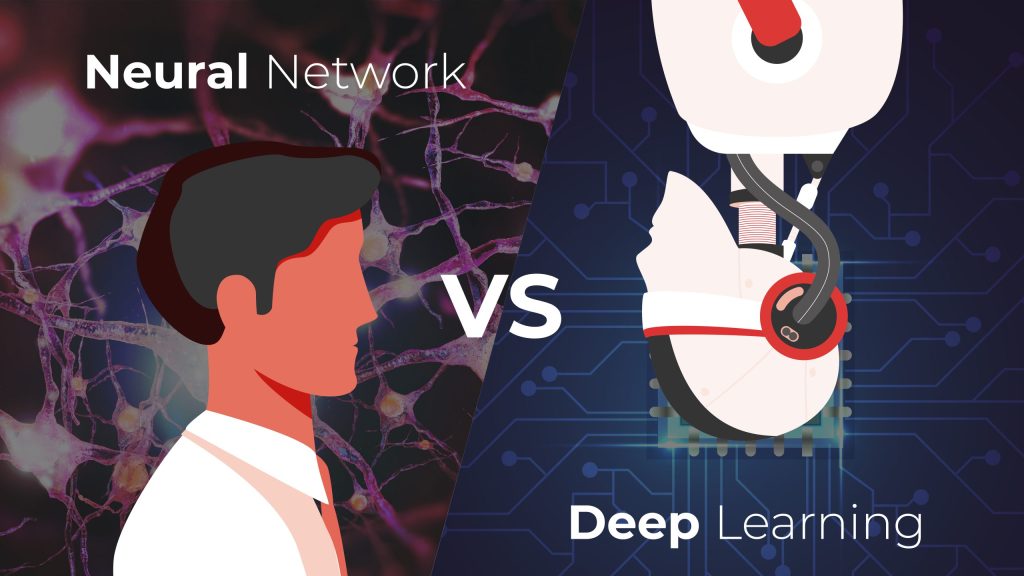
The journey of neural networks took a remarkable turn with the emergence of deep learning, a subfield of machine learning that focuses on utilizing large networks with many layers, often referred to as deep neural networks (DNNs). This evolution, primarily spurred by advancements in computational power and the availability of massive datasets, has transformed the landscape of artificial intelligence.
Advancements in Hardware: Making Deep Learning Possible
The profound success of deep learning architectures can largely be attributed to the parallel processing capabilities of Graphics Processing Units (GPUs), which enabled faster training of complex models. Traditional CPUs could not efficiently handle the computational demands of deep networks, but GPUs, designed for high-volume mathematical computations, allowed researchers to train deep learning models with millions of parameters in a reasonable timeframe. This computational might catalyzed breakthroughs in numerous fields including image recognition, natural language processing, and even game playing.
State-of-the-Art Architectures and Techniques
Among the notable innovations in deep learning are Generative Adversarial Networks (GANs) and Transformer models. GANs, introduced by Ian Goodfellow et al., utilize a unique dual-network structure consisting of a generator and a discriminator. By pitting these networks against each other, GANs can produce highly realistic synthetic images, which have applications ranging from art generation to enhancing virtual reality experiences. In the realm of healthcare, GANs have been used to augment medical imaging datasets, allowing radiologists to better train deep learning models despite often limited available data.
Transformers, on the other hand, have revolutionized the way we process sequential data. Initially designed for natural language processing tasks, models like BERT and GPT have captured the imaginations of developers and researchers alike. Unlike traditional RNNs, which relied on recurrent connections to handle sequences, transformers utilize a self-attention mechanism, permitting them to process entire sequences of data simultaneously. This architectural shift has allowed transformers to achieve unprecedented performance in tasks such as language translation, sentiment analysis, and even creative writing.
The Impact of Large Datasets and Transfer Learning
Another pivotal aspect of the deep learning surge has been the ability to harness big data. With the internet continually generating vast amounts of information—from social media interactions to sensor data—researchers have found that access to large, diverse datasets significantly enhances the performance of deep learning models. Furthermore, the concept of transfer learning has emerged, allowing models pre-trained on large datasets to be fine-tuned on specific tasks. This approach not only reduces the resources and time required for training but also enables smaller organizations to leverage deep learning technologies that would have previously only been accessible to well-funded tech giants.
In the landscape of neural networks, we now stand at a crossroads. The incredible success of deep learning has led to its integration in everyday applications, from virtual assistants like Siri and Alexa to recommendation systems on platforms like Netflix and Amazon. The sheer impact and versatility of these deep architectures have made them an indispensable part of the AI revolution, continually pushing the boundaries of what is possible. As we venture further into this domain, the potential for innovation remains limitless, setting the stage for the next generation of intelligent systems capable of understanding and transforming our world.
DISCOVER MORE: Click here to dive deeper
Conclusion: The Future of Neural Networks Awaits
The evolution of neural networks from the simple perceptron to intricate deep neural networks (DNNs) is a testament to the remarkable advancements that have reshaped artificial intelligence. This journey highlights not only the increasing complexity of these models but also the vital role of technological progress, particularly in computational power and data availability. With the introduction of techniques such as transfer learning and the harnessing of big data, we have witnessed an unprecedented democratization of deep learning, allowing even small entities to tap into its potential.
As we stand at the intersection of innovation and application, the implications of deep learning span across various sectors—from enhancing healthcare with more reliable diagnostics using Generative Adversarial Networks (GANs) to transforming industries with generative and predictive analytics. The revolution brought about by architectural breakthroughs such as the Transformer models is paving the way for further developments yet to come.
Looking ahead, the ongoing evolution of neural networks promises to blur the lines between human and machine understanding. As AI systems become increasingly integrated into our daily lives, the convergence of deep learning with emerging disciplines, such as quantum computing and neuro-inspired algorithms, could usher in a new era of smarter, more intuitive technologies. Therefore, the legacy of neural networks is not just one of achievement; it is an open invitation for researchers and practitioners alike to explore the boundless possibilities that await in the ever-expanding field of artificial intelligence.


 Linda Carter