How to Create a Watering Schedule Based on Plant Types and Seasons
Understanding the Importance of a Watering Schedule
Proper watering is vital for maintaining healthy plants. It goes beyond just keeping the soil moist; different plants have unique watering needs depending on their type and the season. Establishing an effective watering schedule will not only improve plant growth but also promote sustainability within our gardens and landscapes.
Diverse Plant Needs
When it comes to watering, not all plants are created equal. Understanding their specific requirements is key to cultivating a thriving garden. Here, we explore the different watering needs among common plant categories:
- Succulents and Cacti: These hardy plants thrive in arid environments and are adapted to store water in their leaves and stems. Because of this remarkable ability, they require less frequent watering. Often, a deep soak every two to three weeks is sufficient, particularly in warmer months. Overwatering can lead to root rot, so it’s crucial to check soil moisture before proceeding.
- Ornamental Plants: These plants add beauty to our gardens but typically need moderate watering. During blooming seasons, such as spring and early summer, they may demand more frequent watering to support vibrant blooms. Examples include petunias, geraniums, and pansies, which benefit from regular hydration to keep their colors bright.
- Vegetables: This category needs consistent moisture to thrive, especially during peak growth periods. For instance, tomatoes and cucumbers can become stressed if they experience dry spells. A watering schedule that ensures the soil remains evenly moist will promote healthier yields and better taste. A common practice is to water them deeply and less frequently to encourage deeper root growth.
Seasonal Considerations
As the seasons change, so do the watering requirements for plants. Understanding these variations can lead to more effective gardening strategies:
- Spring: The revival of growth in spring means that many plants increase their water consumption. As temperatures rise, plants like daffodils and tulips will benefit from regular hydration to support their rapid growth and blooming.
- Summer: The heat of summer can be intense, particularly in regions like the Southwest. Daily watering may be necessary for certain plants, especially vegetables and annual flowers. Gardeners should aim for early morning watering to prevent evaporation loss and fungal diseases.
- Fall: As many plants begin to enter dormancy, their water needs gradually decrease. This is a time to prepare the garden for winter; however, it’s essential to keep an eye on late-blooming perennials that may still require occasional moisture.
- Winter: Most plants require minimal watering during winter, especially if they are dormant. However, indoor plants or heated greenhouses may need more attention due to dry air conditions, necessitating a careful balance to prevent wilting.
By tailoring your watering schedule to these essential factors, you can ensure that your garden flourishes throughout the year. A well-planned system not only nurtures plants but also conserves water, aligning with eco-friendly gardening practices. As we delve deeper into creating an effective watering system, you’ll uncover practical tips and expert insights that can help your plants thrive no matter the season. Your garden’s health and sustainability depend on this crucial knowledge, so start your watering journey today to see tangible results!
DIVE DEEPER: Click here to enhance your gardening skills
Tailoring Your Watering Schedule
Creating an effective watering schedule is essential for the health and vibrancy of your plants. By understanding how different plant types respond to moisture and how seasonal changes impact their water needs, you can develop a comprehensive watering plan that suits your garden landscape. Let’s dive into the nuances of tailoring your watering schedule based on plant characteristics and seasonal dynamics.
Recognizing Plant Categories and Their Watering Needs
To formulate an optimal watering schedule, it’s important to first categorize your plants and recognize their specific needs. Here’s a closer look at a few common categories:
- Tropical Plants: Plants like ferns and philodendrons thrive in high humidity environments and prefer consistently moist soil. These plants typically require watering every few days, especially during the growing season. It’s crucial to maintain moisture without allowing the soil to become waterlogged, as overly wet conditions can lead to root rot.
- Herbaceous Plants: This group, which includes herbs like basil and cilantro, generally prefers moderate watering. They benefit from regular moisture, especially during their active growth phases in spring and summer. A weekly watering schedule that balances moisture throughout the soil will encourage robust growth without stressing the plants.
- Perennials: These plants can be a bit more resilient during dry spells, though they still require adequate hydration, particularly during flowering seasons. For instance, established perennials such as echinacea and daylilies typically need watering once a week, but their requirements may increase during hot spells, necessitating more frequent checks on soil conditions.
A Seasonal Approach to Watering
Alongside plant types, seasons also dictate how much and how often you should water. Here are some key points to consider for each season:
- Spring: As plants awaken from dormancy, their need for water rises. During this period, many species, especially new plantings, will need more frequent watering. Soil should be kept consistently moist to support new growth, particularly for flowering plants.
- Summer: This peak growing season demands vigilance. Many plants face high temperatures that can dry out the soil quickly. A thorough watering strategy that includes watering early in the morning or late in the evening can maximize water absorption and minimize evaporation. Be prepared to adjust your schedule to water daily in extreme heat.
- Fall: As temperatures drop, many plants start to conserve energy and enter dormancy. This is the time to scale back on watering. However, be mindful of late bloomers which may still need hydration to support their final growth bursts.
- Winter: Watering needs typically decrease significantly during winter months. For outdoor plants in colder climates, watering should be minimal, reserving moisture only for occasional warm spells. On the other hand, indoor plants and those in greenhouses may still require more attention to prevent drying out in heated environments.
With this understanding of plant types and seasonal influences, you are now equipped to create a watering schedule that promotes optimal growth and sustainability in your garden. By observing the different needs of your plants throughout the year, you can take proactive measures to ensure their health and beauty. A thoughtful watering plan not only nurtures your plants but also enhances the overall ecosystem of your garden.
Understanding Plant Needs
Creating an effective watering schedule requires an understanding of plant types and their specific needs throughout the seasons. Different plants have varying moisture requirements based on their natural habitats, growth cycles, and overall health during the year.
Seasonal Considerations
As seasons change, so do the watering needs of your plants. In spring, many plants enter their growing phase, requiring more water to support budding leaves and flowers. Conversely, in the summer, heat can increase evaporation rates, making it essential to adjust the schedule accordingly. During autumn, many plants begin to prepare for dormancy; thus, their water intake typically decreases. Finally, in winter, while many plants might be dormant, it’s critical to monitor them carefully, as they still need moisture to survive.
Types of Plants
Different plant categories affect how we approach a watering schedule. For instance, succulents and cacti demand less frequent watering due to their water-storing capacities, while tropical plants often require more consistent moisture. Understanding these classifications ensures you are not over or under-watering.
Creating Your Schedule
To create a customized watering schedule, observe your garden closely. Establish a regular pattern based on plant types and specific seasonal conditions. Consider utilizing moisture meters or simply feel the soil to determine when watering is truly necessary. Keeping a gardening log can also help track each plant’s growth and requirements.By combining knowledge of plant types and seasonal changes, you pave the way for a successful watering strategy that promotes healthy growth and sustainability in your garden.
| Category | Description |
|---|---|
| Succulents | Require infrequent watering, thrive in dry conditions. |
| Tropical Plants | Need consistent moisture and humidity. |
DISCOVER MORE: Click here to learn how to create your own sustainable indoor garden
Adapting Your Watering Techniques
In addition to understanding your plants and the seasons, adapting your watering techniques plays a crucial role in sustaining moisture levels while optimizing water use. Various tools and methods exist that can enhance your watering practice, ensuring plants receive just the right amount of hydration. Explore these strategies to effectively implement your watering schedule.
Utilizing Efficient Watering Methods
Watering techniques can drastically alter how well moisture seeps into the soil and reaches plant roots. Here are several effective methods to consider:
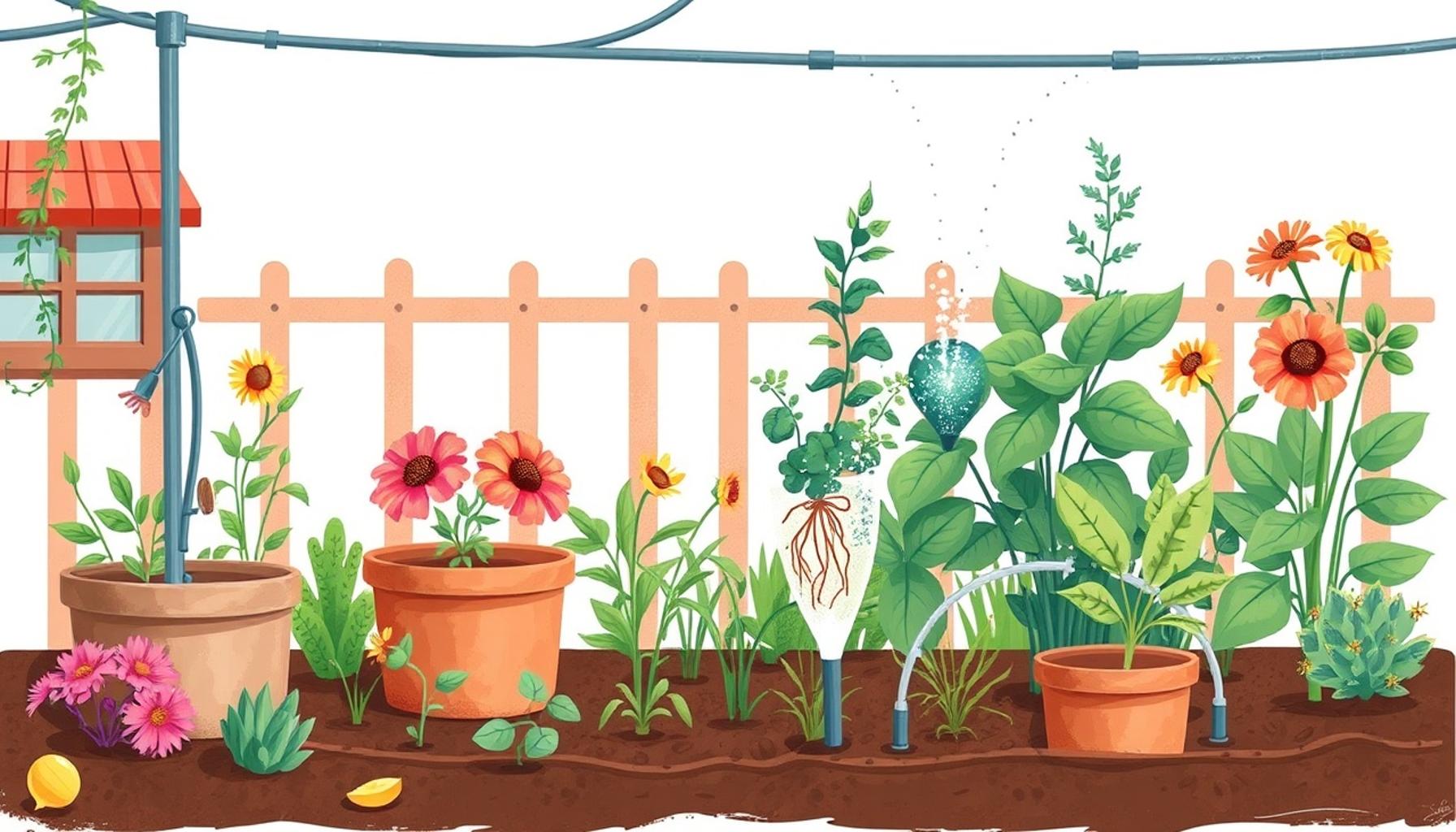
- Drip Irrigation: This efficient technique delivers water directly to the plant’s roots through a network of tubing and emitters. It minimizes evaporation and runs-off and is particularly advantageous for gardens with diverse plant types that have varying water needs. Implementing a timer can ensure consistent watering intervals, tailored to each plant’s requirements.
- Soaker Hoses: These porous hoses allow water to seep slowly and continuously into the soil, providing thorough hydration without oversaturation. Placing soaker hoses strategically can be beneficial in vegetable gardens, ensuring every plant receives adequate moisture while conserving water.
- Watering Cans and Hoses: For a more personalized approach, traditional watering cans and hoses provide direct control over how much water each plant receives. This method is particularly useful for indoor plants or gardens with unique watering needs. Consider using a watering can with a long spout for reaching plants in tight spaces.
Monitoring Soil Moisture Levels
Understanding the moisture levels of your soil is essential for creating an effective watering schedule. Over or under-watering can lead to a host of plant health issues. Here are some techniques to monitor soil moisture:
- Soil Moisture Meters: These handy devices measure the moisture content at various depths. By inserting a probe into the soil, you can gauge whether it’s time to water. This tool is invaluable for maintaining an ideal watering routine, especially for those who may have difficulty judging soil dryness by touch.
- Finger Test: A simple yet effective method is the finger test. Insert your finger about an inch into the soil – if it feels dry at that depth, it’s time to water. This technique allows you to evaluate moisture levels quickly and is a great method for gardeners who prefer a hands-on approach.
- Observation: Observing plant health is another crucial aspect of monitoring. Wilting or yellowing leaves often indicate insufficient water, while too much moisture can cause leaf curl or mold growth. Becoming familiar with your plants’ visual cues can help you adjust your watering schedule efficiently.
Creating a Flexible Watering Schedule
While having a watering schedule is beneficial, adaptability is key to managing unforeseen climatic changes. Weather fluctuations greatly affect soil moisture. During a season of unexpected rainfall, for instance, you may need to revise your plan to avoid overwatering. Conversely, a sudden heatwave may require you to intensify your watering routine.
Consider implementing a seven-day schedule in which you set specific days for watering based on recent rainfall or temperature fluctuations. A rain gauge can provide valuable data, enabling you to adjust watering frequency based on recent precipitation. The goal is to maintain a healthy balance that caters to your plants while utilizing resources wisely.
In sum, by harnessing efficient watering methods, closely monitoring soil moisture, and maintaining a flexible watering schedule, you can create an effective irrigation strategy based on plant types and seasonal changes. These practices not only support the well-being of your plants but also promote sustainability in your gardening efforts.
DON’T MISS OUT: Click here for natural pest solutions
Conclusion
Creating an effective watering schedule based on plant types and seasons is essential for nurturing a thriving garden. Every plant species has its own unique water requirements influenced by factors like root depth, leaf surface area, and overall growth habits. For instance, succulents, which are adapted to arid conditions, require significantly less water compared to thirstier vegetables like tomatoes or cucumbers that thrive in moist soils. Understanding these needs will help you tailor your watering strategy more effectively.
Additionally, environmental conditions play a pivotal role in determining how much water your garden needs. For example, during the hot summer months in regions such as the Southwest, incorporating a deep watering approach can encourage deep root growth, making plants more resilient to drought conditions. Conversely, in the spring when temperatures are milder and rainfall may be more frequent, you might scale back to avoid waterlogging your plants.
Utilizing modern tools like soil moisture meters can take the guesswork out of watering. These handy devices provide real-time feedback on the moisture levels within the soil, allowing you to adjust your watering regime as needed. Similarly, irrigation methods such as drip irrigation or soaker hoses are not only efficient but also help minimize water wastage—a crucial factor especially for gardeners in states facing water restrictions.
Moreover, incorporating regular observations of plant wellness into your routine enables you to fine-tune your approach as necessary. Signs of over-watering, such as yellowing leaves or moldy soil, and indicators of under-watering, like wilting or browning tips, can guide your adjustments. A flexible watering schedule that takes real-time climatic conditions and moisture data into account empowers you to make informed decisions, effectively avoiding the common pitfalls of over or under-watering that many gardeners face.
In this era of environmental awareness, adopting these thoughtful practices not only benefits your garden but also aligns with sustainable gardening principles. By minimizing water usage and promoting plant health, you become part of a broader movement towards environmental conservation. As you embark on this gardening journey, consider sharing your experiences and strategies with fellow gardeners. Engaging in community discussions fosters learning and growth, collectively helping everyone create more beautiful and resilient outdoor spaces. Continue exploring the wealth of resources—whether local gardening clubs, online forums, or botanical workshops—and your garden will flourish season after season, becoming a source of joy and pride.